How to Start Collecting Sports Memorabilia: A Beginner's Guide
How to start collecting sports memorabilia: pick a focus, set a budget, buy official or authenticated pieces, and store and display them so they last.
Fan Gear Finds is reader-supported. When you shop through links on this site we may earn a commission, at no extra cost to you. We only link to official league stores and stores we have an approved affiliate relationship with.
Quick answer To start collecting sports memorabilia, pick a focus (one team, one player, one era or one type of item), set a budget you're comfortable with, and buy officially licensed gear or autographs with authentication you can verify. Keep receipts and certificates together, store pieces away from sunlight and humidity, and display your favorites so the collection becomes part of your fandom.
Learning how to start collecting sports memorabilia is less about money and more about having a plan. The fans with the best collections usually didn't buy everything they saw. They picked a story they wanted to tell (a team, a player, a run of seasons) and added to it one meaningful piece at a time.
This guide walks through choosing a focus, the main types of memorabilia, how to buy with confidence, and how to store and show off what you collect so it lasts.
Start with a focus
A collection with a theme feels intentional and is easier to build. Without one, it turns into a shelf of random items. Here are the most common ways fans narrow it down.
One team
The most popular approach. Collect across eras: a current jersey, a throwback, ticket stubs from games you attended, a mini helmet or a signed puck. A team collection grows with every season and never runs out of material.
One player
Follow a single player's career from start to finish. Trading cards from different years, jerseys from each team they played for and items tied to milestone games make a collection with a clear story.
One era or moment
Some fans collect a decade they grew up watching, a championship season or a famous rivalry. Throwback jerseys and vintage-style gear fit this approach well.
One type of item
You can also collect by category instead of by team: every mini helmet in the league, a wall of pucks, a run of bobbleheads or a stack of game programs. This approach lets you follow the whole league while keeping the display uniform.
Set a budget before you buy
Memorabilia covers everything from a ticket stub to a game-worn jersey, so it's easy to overspend. Decide what you're comfortable spending per month or per season, and stick to it.
A practical rule of thumb: for the cost of one big-ticket item, you can often add several smaller pieces that tell more of the story. Many collectors start with affordable, officially licensed items and save the larger purchases for pieces that mean the most to them.
Collect what you love, not what you hope will gain value. Values move with player careers, trends and the overall market, and nobody can promise any piece will be worth more later. A collection you enjoy every day is the one that pays off.
Types of sports memorabilia
Jerseys
Jerseys are the backbone of most collections. Official replica and authentic jerseys are widely available, and throwback styles add history. Our guide to replica vs. authentic jerseys explains the differences if you're deciding which to collect.
Autographed items
Signed balls, photos, pucks, helmets and jerseys are the pieces most collectors dream about. They're also where fakes are most common, so authentication matters more here than anywhere else (more on that below).
Mini helmets, pucks and balls
Mini helmets, team pucks and game-style balls are affordable, consistent in size and easy to display in rows. They're a great way to start, and they make perfect blanks if you ever get a chance at an autograph.
Trading cards
Cards are compact, easy to store and available at every level, from packs to graded singles, and fit naturally into a team or player collection.
Tickets, programs and game-day keepsakes
Ticket stubs, programs, pennants and stadium giveaways cost little or nothing and carry the most personal stories. Hold on to them. They're often the pieces that mean the most years later.
Bobbleheads and figures
Bobbleheads and collectible figures add personality to a shelf and are easy to group by team or player.
How to buy memorabilia with confidence
Buy officially licensed gear
For jerseys, mini helmets, pucks and other team gear, buy from the league's official store or a seller you can verify. Look for the league's licensed-product label on the tag or packaging. Our guide on how to tell if fan gear is officially licensed covers the warning signs of knockoffs.
Insist on authentication for autographs
A certificate of authenticity is only as good as the company that issued it. Prefer autographs from reputable third-party authenticators, items with a tamper-evident hologram you can look up, or signatures obtained through official team or league channels. If a deal on a signed item seems too good to be true, treat it as a red flag.
Keep the paperwork
Save receipts, order confirmations, certificates and hologram numbers. Store them in a labeled folder or a sleeve tied to each item. Paperwork helps with authenticity, insurance and resale if you ever need it.
Track what you own
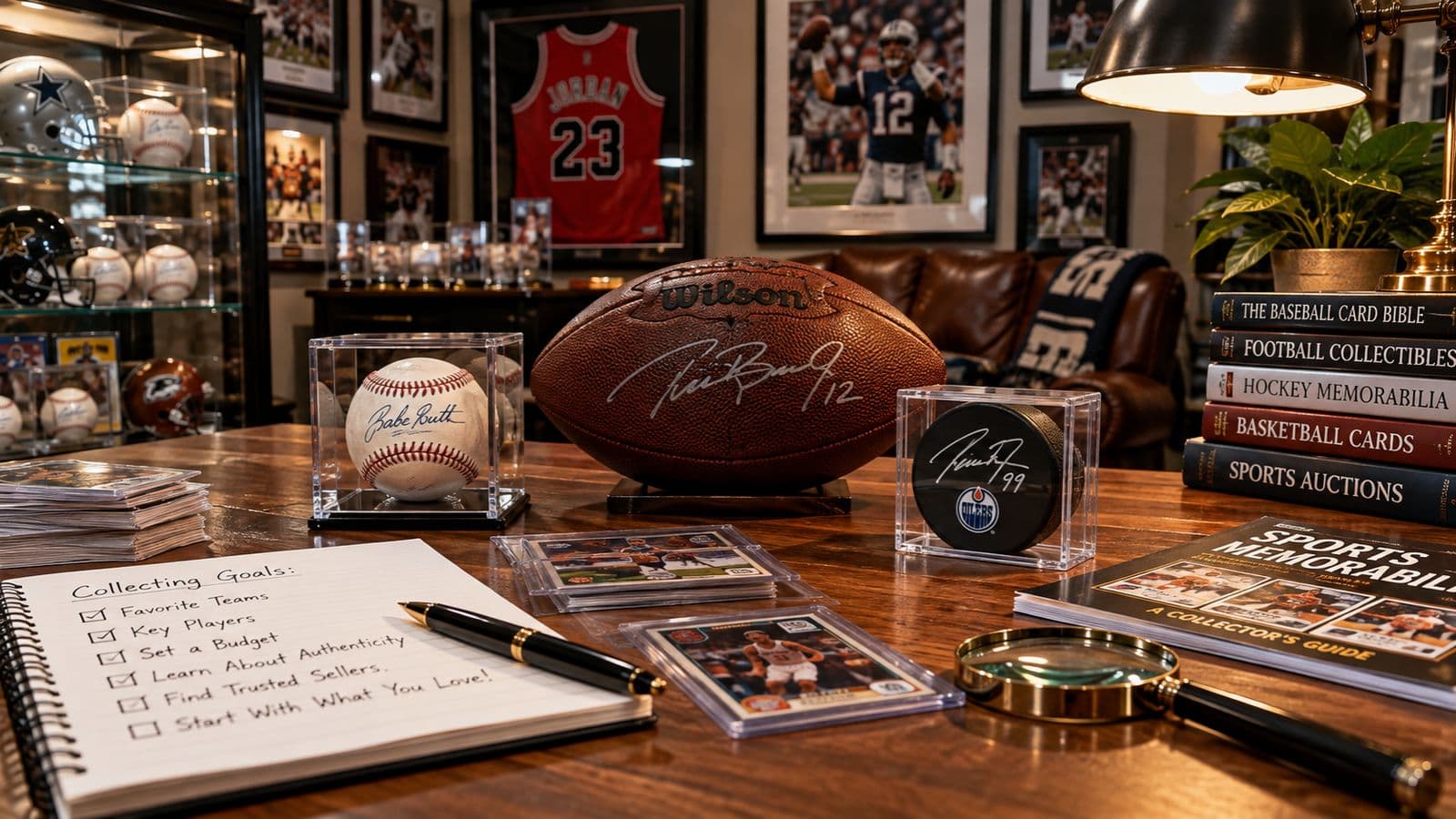
A simple spreadsheet or notes app works: item, date acquired, where it came from, authentication details and a photo. It keeps you from buying duplicates and makes insuring a larger collection much easier.
How to store and protect a collection
Keep it out of the sun
Direct sunlight fades jerseys, cards and autographs, sometimes faster than you'd expect. Display pieces on walls that don't catch strong daylight, and use UV-filtering cases or glazing for anything signed.
Control heat and humidity
Attics, garages and damp basements are hard on paper, fabric and ink. Store memorabilia in a climate-controlled part of the home, away from heating vents and radiators.
Use the right cases
Clear acrylic cubes for balls and pucks, display cases for mini helmets, top-loaders or sleeves for cards and acid-free storage for programs and tickets. Cases keep dust and fingerprints off and make the collection look finished.
Handle signed items carefully
Touch autographs as little as possible, keep them away from moisture and never clean over a signature. For jerseys, our guide on how to frame a jersey covers archival framing that protects the fabric and the ink.
Display it where you'll see it
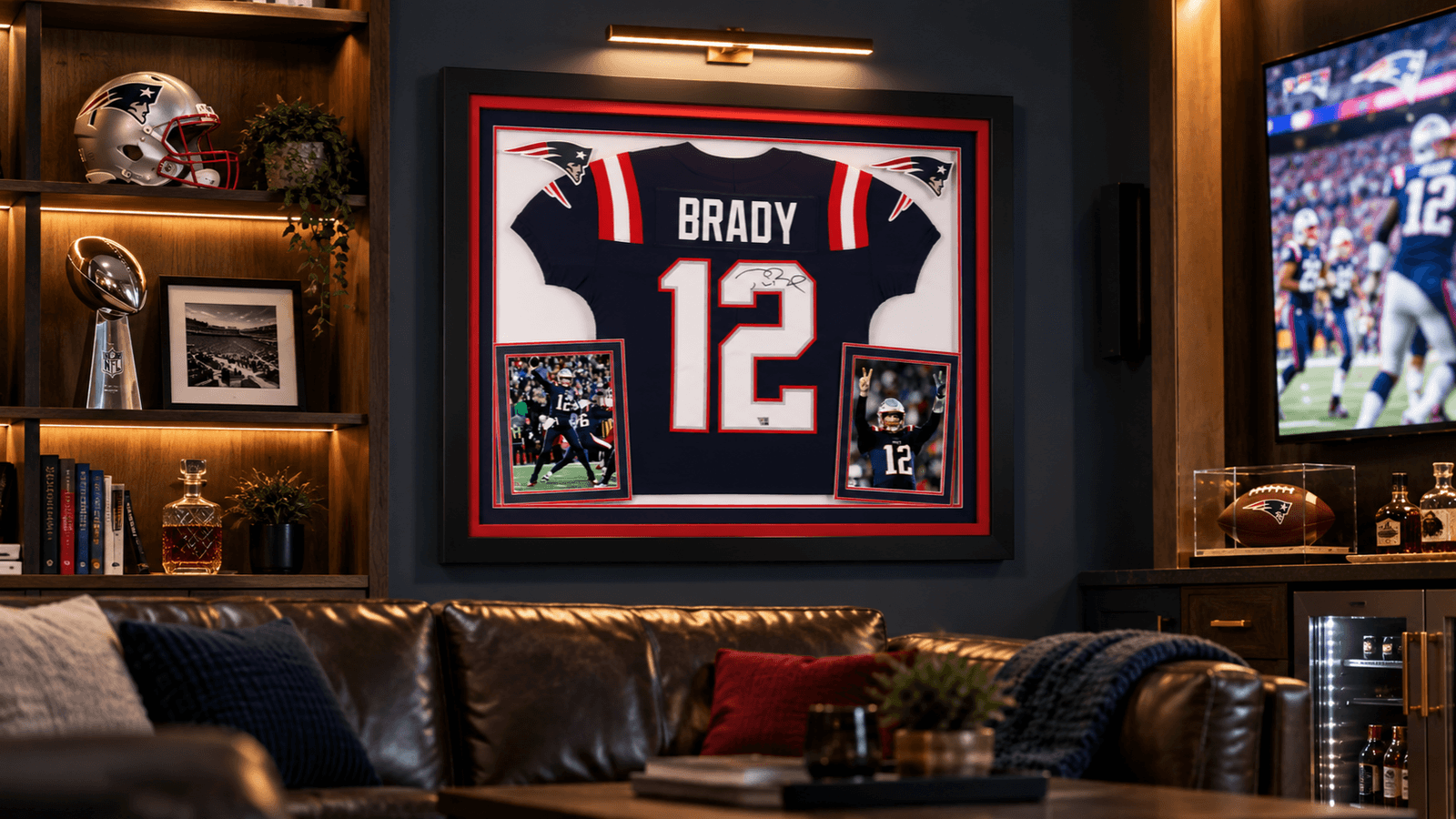
A collection in a closet is easy to forget. Group pieces by theme on shelves or in a lighted cabinet, frame a favorite jersey as the centerpiece, and give the display room to grow. If you're building a game room around it, our list of football fan cave essentials has ideas for making the collection part of the space.
Frequently asked questions
What is the best way to start collecting sports memorabilia?
Pick a focus, such as one team, one player or one type of item, and set a budget. Start with officially licensed pieces you'll enjoy displaying, then add autographs and bigger items over time.
What sports memorabilia is good for beginners?
Mini helmets, team pucks, officially licensed jerseys, trading cards and game-day keepsakes like ticket stubs and programs are easy starting points. They're widely available, simple to display and build a theme quickly.
How do I know if a signed item is real?
Look for authentication from a reputable third-party company, ideally with a tamper-evident hologram and a certificate number you can verify. Be cautious with signed items that have no paperwork or are priced far below similar pieces.
Is sports memorabilia a good investment?
Treat it as a hobby first. Values change with player careers, trends and the market, and no piece is guaranteed to rise in value, so collect what you enjoy owning.
How should I store sports memorabilia?
Keep it in a climate-controlled room, out of direct sunlight and away from heat and humidity. Use clear cases for balls and helmets, sleeves for cards and UV-protective framing for signed jerseys and photos.
Build your collection one piece at a time
The best collections start small: a clear focus, a sensible budget and pieces you can trust. Add what means something to you, protect it well and put it where you'll see it every day.
Ready for your first piece? Find your team and start with the item that tells your story.